
By: Aditi
Published on: Jun 04, 2025
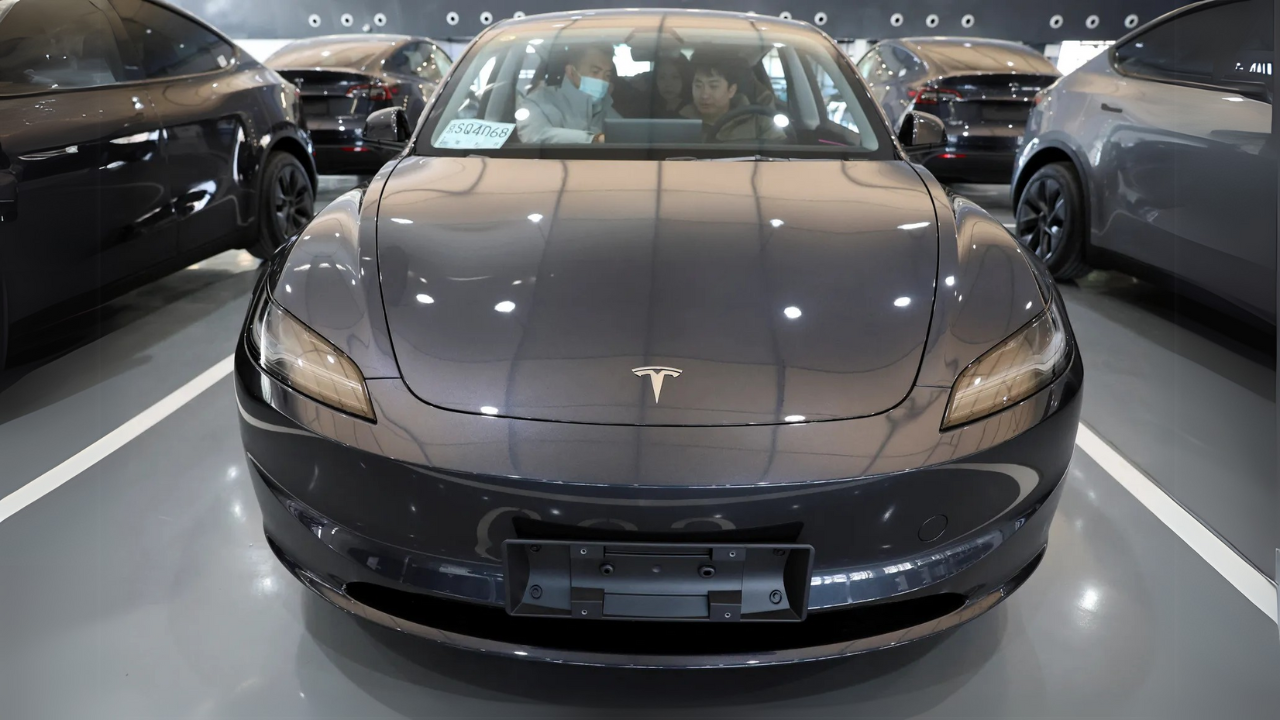
Tesla, the pioneering electric vehicle (EV) manufacturer, has faced another challenging month in China, with its sales continuing to decline for the eighth consecutive month. According to data from the China Passenger Car Association (CPCA), Tesla's China-made EV sales fell by 15% year-over-year in May 2025, marking a persistent struggle in the world's largest automotive market. This downturn comes amid fierce price competition, an aging product lineup, and shifting consumer sentiment influenced by CEO Elon Musk's political engagements.
In May 2025, Tesla delivered 61,662 China-made Model 3 and Model Y vehicles, a 15% drop compared to the same period last year. This follows a 6% decline in April, indicating a worsening trend. While the company saw a modest 5.5% month-over-month increase from April, the year-over-year slump highlights deeper challenges.
The reported figures include both domestic sales in China and exports to Europe and other markets. However, the overall decline suggests weakening demand across key regions. Tesla’s Shanghai Gigafactory, which serves as its primary export hub, has been instrumental in supplying vehicles to Europe, but sales in those markets have also struggled.
China’s EV market is one of the most competitive in the world, with over 40 brands engaged in a relentless price war since Tesla initiated aggressive discounts in 2023. Rivals like BYD, Geely, and Chery have responded with their own price cuts and incentives, squeezing Tesla’s market share.
In late May, BYD rolled out fresh discounts on more than 20 models, prompting competitors to follow suit. The Chinese government has even called for an end to these bruising price wars, citing long-term industry instability.
Tesla’s current offerings—the Model 3 and Model Y—have remained largely unchanged in design and features for several years. While these vehicles were once industry leaders, newer models from Chinese automakers offer more advanced technology, better range, and competitive pricing, making Tesla’s lineup appear outdated.
CEO Elon Musk’s high-profile political activities have also been cited as a deterrent for some buyers. His controversial statements and involvement in government-related projects have polarized public opinion, potentially alienating a segment of environmentally conscious consumers who once favored Tesla.
To counteract declining demand, Tesla recently introduced an incentive allowing Chinese buyers to transfer their Full Self-Driving (FSD) capabilities to new vehicles if purchased by the end of June. This move aims to attract existing Tesla owners to upgrade while showcasing the company’s technological edge in autonomous driving.
For the first time this year, Tesla’s Model 3 and Model Y were included in a Chinese government initiative promoting EV adoption in rural areas. This program provides subsidies and financing options, potentially boosting sales in less urbanized regions where EV penetration is still growing.
Tesla’s biggest rival, BYD, continues to outperform in China. The company reported a 14.1% year-over-year increase in global passenger vehicle sales in May, reaching 376,930 units. While this growth rate slowed from April’s 19.4%, BYD’s diversified product range—spanning budget to premium EVs—gives it a competitive edge.
Tesla’s challenges are not limited to China. European sales have also declined, with consumers showing reluctance toward the brand amid Musk’s political controversies and the lack of new models. Unlike Chinese automakers, which are rapidly expanding in Europe with competitively priced EVs, Tesla has struggled to maintain momentum.
Analysts suggest that Tesla must accelerate its vehicle refresh cycle to stay competitive. A redesigned Model 3 (codenamed Highland) and Model Y (Juniper) are expected, but delays could further erode market share.
Tesla’s Shanghai factory remains a critical asset, allowing the company to produce vehicles at lower costs. However, further localization—such as sourcing more components domestically—could help reduce prices and improve competitiveness.
Navigating China’s regulatory environment while maintaining consumer trust will be crucial. Tesla must balance innovation with affordability while addressing concerns over Musk’s political influence.
Tesla’s 15% year-over-year sales decline in China underscores the mounting pressures facing the EV giant. Intense competition, an aging product lineup, and shifting consumer perceptions present significant hurdles. While incentives and government-backed initiatives may provide short-term relief, Tesla’s long-term success in China will depend on its ability to innovate, refresh its models, and navigate an increasingly cutthroat market.
As the global EV race intensifies, Tesla must adapt swiftly—or risk losing its dominance in the world’s most critical automotive market.





Comments
No comments yet. Be the first to comment!
Leave a Comment