

Can US Stocks Sustain Their Rally? Rising Valuations & Earnings Uncertainty Loom Post-Tariff Rebound
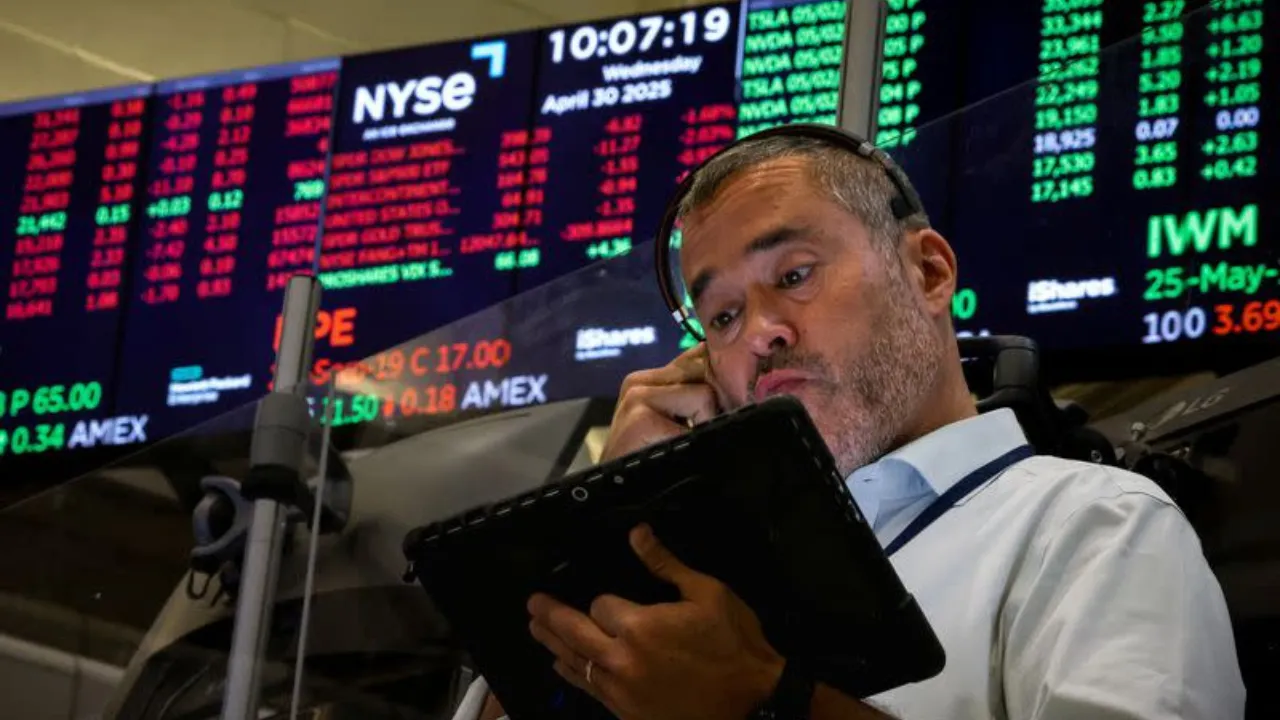
The U.S. stock market has staged a volatile recovery since President Donald Trump’s sweeping April 2 tariffs rattled global markets. While a robust Q1 earnings season and tempered trade fears fueled the rebound, investors now face a critical question: Can the S&P 500 overcome rising valuations, murky earnings forecasts, and lingering trade risks to sustain its momentum?
This analysis unpacks the challenges confronting U.S. equities in May 2025, including:
- Valuation concerns as the S&P 500 trades at a 20.6x forward P/E ratio
- Mixed earnings signals with strong Q1 results but downgraded future estimates
- Ongoing trade uncertainty ahead of U.S.-China talks in Switzerland
- Technical resistance levels like the 200-day moving average
Let’s dive into the factors shaping the market’s next move.
The Tariff Roller Coaster: From Swoon to Rebound
April’s Tariff Shock & Market Volatility
President Trump’s April 2 tariffs on key trade partners triggered a 7.5% drop in the S&P 500 over six sessions, accompanied by a surge in the Cboe Volatility Index (VIX) to 52.33—a five-year high. Investors feared a prolonged trade war, particularly with China, which accounts for 15% of U.S. goods imports.
The Rebound Drivers
Stronger-Than-Expected Q1 Earnings:
- 73% of S&P 500 companies beat earnings estimates, with overall growth at 13.6% YoY (vs. 8% forecasted).
- Tech and industrials led gains, offsetting tariff-related dips in autos and agriculture.
Trade Optimism:
- News of U.S.-China talks in Switzerland (led by Treasury Secretary Scott Bessent and VP Premier He Lifeng) eased fears of escalation.
- Bessent framed the meeting as a step toward “de-escalation,” boosting sentiment.
By May 7, the S&P 500 had erased its post-tariff losses, but remains 8% below its February 2025 peak.
Q1 Earnings: A Silver Lining with Clouds Ahead
The Good News
- Consumer Discretionary & Tech Shine: Companies like Amazon (AMZN) and NVIDIA (NVDA) posted double-digit profit growth.
- Margin Resilience: Despite wage pressures, net margins held steady at 11.3%.
The Bad News
- Guidance Downgrades: 56% of firms issued below-consensus Q2 forecasts (vs. 51% historical average).
- 2025 EPS Growth Slashed:
-
-
Q2-Q4 estimates fell to 3.8%, down from 5.2% in March.
-
Goldman Sachs warns tariffs could dent earnings by 4-6% if implemented fully.
-
“Visibility on the tariff landscape remains very low,” said Allen Bond of Jensen Investment Management. “Companies must reassess their strategies as policies evolve.”
Valuation Concerns: Are US Stocks Overpriced?
Key Metrics Flash Warning Signs
- Forward P/E Ratio: 20.6x (vs. 10-year average of 18.5x)
- Equity Risk Premium: 3.2% (near 10-year lows, signaling weaker compensation for risk)
- 10-Year Treasury Yield: 4.3% (up 10 bps since April 2, pressuring equity valuations)
Why Higher Yields Matter
Rising Treasury yields:
- Increase borrowing costs for companies (S&P 500 debt-to-equity ratio: 1.2x).
- Make bonds more attractive vs. stocks (dividend yield: 1.5% vs. 10-year yield: 4.3%).
“The market embeds too much optimism,” warned Keith Lerner of Truist Advisory. “There’s little buffer for negative news.”
Technical Analysis: S&P 500’s Battle with Key Resistance
The 200-Day Moving Average Test
The S&P 500 faces a critical technical hurdle at its 200-day moving average (4,950), just 2% above its May 7 close of 4,850. Historically, breaking this trendline requires a fundamental catalyst—like a trade deal or Fed rate cuts.
Post-Streak Performance
The index’s recent 9-day winning streak (April 18–30) hints at bullish momentum. Since 1991, the S&P 500 rose in 11 of 12 instances six months after such streaks, per Nationwide’s Mark Hackett.
But Walter Todd of Greenwood Capital cautions: “Without a trade breakthrough, breaking 4,950 will be tough.”
Trade Talks & Market Sentiment: The China Factor
Switzerland Talks: What’s at Stake
- Key Issues: Tariff rollbacks, intellectual property rules, and semiconductor export curbs.
- Market Impact: A deal could lift the S&P 500 by 5-7%, while failure may reignite volatility.
VIX Signals Lingering Anxiety
Though the VIX has retreated to 25 from April’s 52 peak, it remains 42% above its long-term average—a sign investors still hedge against risks.
“We’re past peak uncertainty, but one tariff tweet could change everything,” said Michael Reynolds of Glenmede.
Investor Strategies: Navigating Uncertainty
Sector Opportunities
- Defensive Plays: Utilities (XLU) and healthcare (XLV) for stability.
- Tariff-Resilient Tech: Cloud giants like Microsoft (MSFT) with limited China exposure.
Fed Policy Wildcard
The May 7 Fed meeting could hint at 2025 rate cuts if trade risks escalate. Lower rates would support valuations but may signal economic worries.
Conclusion: Balancing Optimism with Caution
The U.S. stock market’s rebound reflects resilience, but rising valuations and earnings uncertainty pose hurdles. Key takeaways:
- Trade Developments: A U.S.-China deal is critical for sustained gains.
- Earnings Revisions: Q2 guidance will test the rally’s durability.
- Technical Levels: Watch the 200-day MA (4,950) as a momentum gauge.
Investor Action Plan:
- Stay diversified across sectors and geographies.
- Hedge with gold or Treasurys amid volatility.
- Avoid overexposure to tariff-sensitive industrial