

Elliott Wave Theory Explained: What It Is & How to Use It in Forex Trading
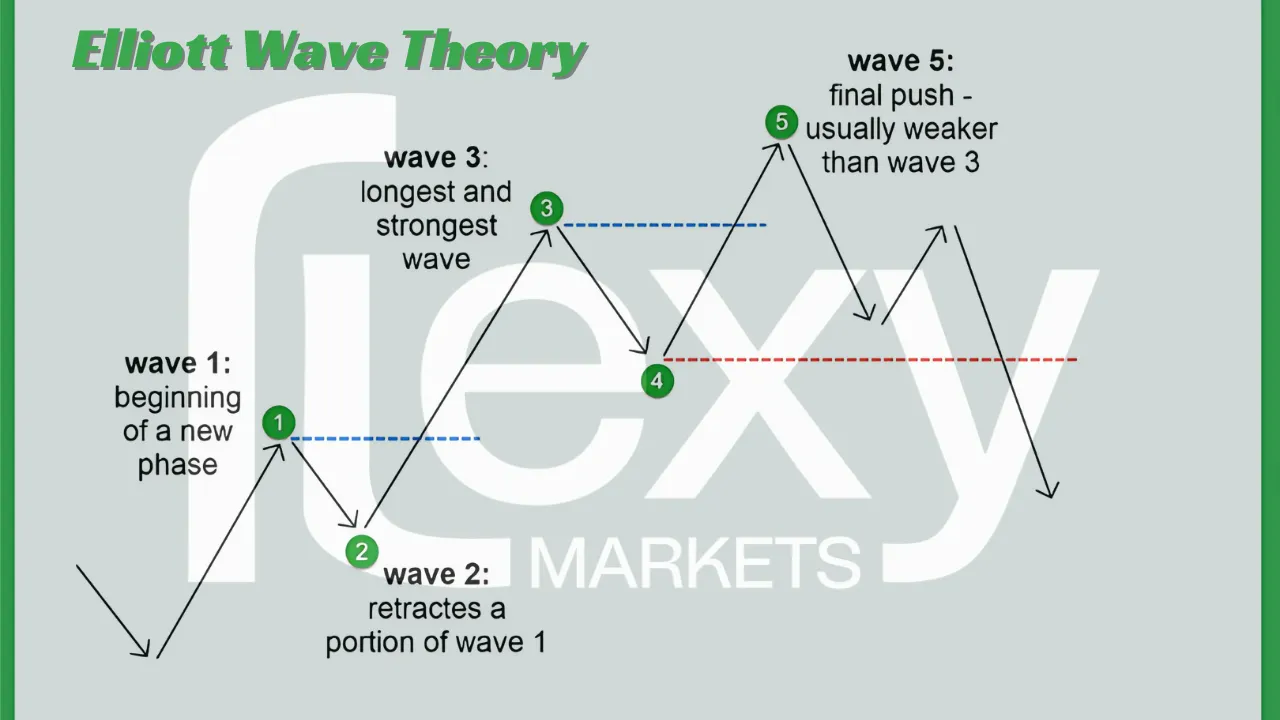
Elliott Wave Theory is a popular technical analysis method used by traders to forecast market trends by analyzing recurring price patterns. Introduced by Ralph Nelson Elliott in the 1930s, this theory is based on the idea that market movements follow predictable cycles influenced by crowd psychology. Today, it remains a crucial tool for traders in forex, stocks, and cryptocurrency markets.
In this blog, we’ll explore the fundamentals of Elliott Wave Theory, how it works, and practical ways to apply it in trading.
What is Elliott Wave Theory?
Elliott Wave Theory is based on the concept that financial markets move in repetitive cycles, driven by the collective behavior of traders. These cycles consist of five-wave patterns in the direction of the trend (impulse waves) followed by three-wave corrections (corrective waves).
The Two Main Wave Types:
Impulse Waves (5-Wave Pattern):
- Moves in the direction of the primary trend.
- Consists of five distinct waves (1, 2, 3, 4, 5).
- Wave 3 is usually the strongest and longest.
Corrective Waves (3-Wave Pattern):
- Moves against the primary trend.
- Consists of three waves (A, B, C).
- Corrective waves help reset the market before another impulse wave starts.
Understanding these patterns helps traders anticipate market trends and make better trading decisions.
How Elliott Wave Theory Works
Elliott Wave Theory follows a structured set of rules that traders use to analyze price movements. Here are the key rules:
- Wave 2 cannot retrace more than 100% of Wave 1.
- Wave 3 is never the shortest among Waves 1, 3, and 5.
- Wave 4 cannot overlap with the price area of Wave 1.
By identifying these patterns, traders can predict potential market reversals and plan their trades accordingly.
How to Use Elliott Wave Theory in Trading
- Identify Market Trends
Elliott Wave Theory helps traders recognize the beginning and end of market trends. By identifying impulse and corrective waves, traders can enter trades at the right time and avoid unnecessary risks.
- Use Fibonacci Ratios for Confirmation
Fibonacci retracement levels play a crucial role in Elliott Wave analysis. Common Fibonacci levels (38.2%, 50%, and 61.8%) help traders identify potential reversal points and entry zones.
- Set Stop-Loss and Take-Profit Levels
By analyzing wave structures, traders can set stop-loss and take-profit levels strategically. For example, placing a stop-loss below Wave 2 ensures risk management if the market does not follow the expected pattern.
- Combine with Other Indicators
For better accuracy, traders often combine Elliott Wave analysis with:
-
Moving Averages (to confirm trends)
-
RSI (Relative Strength Index) (to spot overbought or oversold conditions)
-
MACD (Moving Average Convergence Divergence) (to identify trend strength)
Apply in Different Timeframes
Elliott Wave Theory works on multiple timeframes, from intraday charts to long-term trends. Day traders can use it for short-term price movements, while long-term investors apply it to identify major market cycles.
Common Challenges of Elliott Wave Theory
Despite its effectiveness, Elliott Wave Theory has some challenges:
- Complexity: Identifying waves correctly requires practice and experience.
- Subjectivity: Different traders may interpret wave structures differently.
- False Signals: Market conditions can sometimes lead to misleading wave patterns.
To overcome these challenges, traders should practice with historical data, use additional technical tools, and follow market news for better decision-making.
Conclusion
Elliott Wave Theory is a valuable tool for predicting market movements and improving trading strategies. By understanding impulse and corrective waves, traders can make informed decisions, manage risk effectively, and increase profitability. While it requires time and practice to master, combining Elliott Wave analysis with other technical indicators enhances its accuracy.
If you’re looking to enhance your trading skills, start practicing Elliott Wave analysis and integrate it into your trading plan today!