

Global Stocks Decline as China Issues Retaliation Warning to Trade Partners -How Beijing's Trade Threats Are Reshaping International Markets
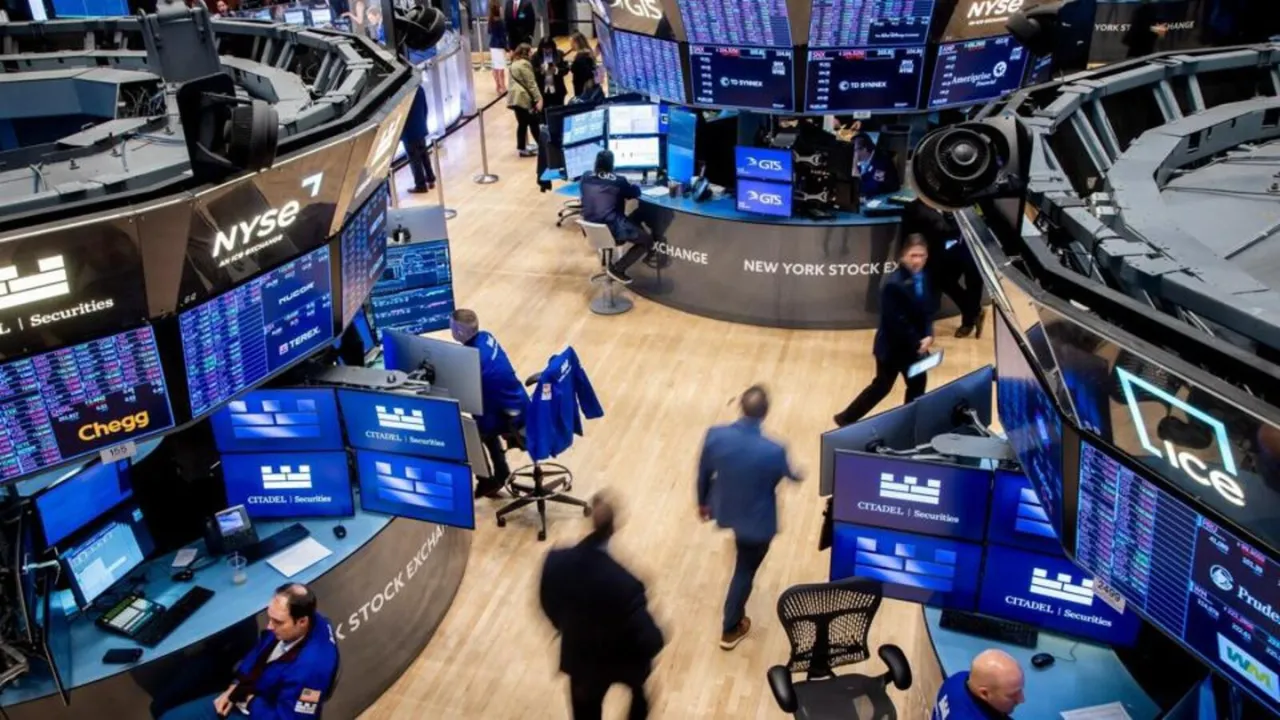
Global financial markets opened the week under pressure as China's combative trade stance sparked investor concerns, triggering declines across major indices and safe-haven asset rallies. With U.S. stock futures signaling a rocky start and key Asian markets closed for Easter Monday, the stage is set for a volatile week shaped by geopolitical tensions and shifting monetary policies.
Key Drivers Behind the Market Selloff
1. China’s Trade Retaliation Warning
Beijing issued a stern warning Monday, vowing to retaliate against nations that align with U.S.-led trade agreements perceived to isolate China. A spokesperson for China’s Commerce Ministry emphasized: “China firmly opposes any deal reached at the expense of its interests. We will resolutely take countermeasures to safeguard our rights.” This declaration follows former President Donald Trump’s recent social media post outlining eight “non-tariff cheating” measures targeting Chinese trade practices, including accusations of currency manipulation and unfair VAT policies.
2. U.S. Stock Futures Signal Anxiety
Dow Jones Industrial Average futures fell 0.9% pre-market, while S&P 500 and Nasdaq futures dropped 1.1% and 1.2%, respectively. These declines extend losses from a holiday-shortened week, where the Dow closed down 1.33%, the S&P 500 eked out a 0.13% gain, and the Nasdaq lagged. Analysts attribute the bearish sentiment to:
- Rising U.S. Treasury yields (10-year notes climbed to 4.36%)
- Strengthening safe-haven demand amid geopolitical uncertainty
- Concerns over delayed Federal Reserve rate cuts
3. Asian and European Markets React
Japan’s Nikkei 225 slid 1.3% as tech and export stocks faltered under yen volatility. Meanwhile, Hong Kong’s Hang Seng (+1.61% last close) and Europe’s Stoxx 600 remained shuttered for Easter Monday, leaving investors few alternatives to absorb the China news.
Safe-Haven Assets in Focus
The dollar extended its decline, hitting a three-week low against a basket of currencies, while gold surged past $3,400/oz—a 15-month high. This rally buoyed mining giants like Newmont Corporation (NEM), whose shares rose 2.8% in premarket trading. Silver and Bitcoin also gained, up 1.2% and 3.4%, respectively, reflecting broad-based risk aversion.
Historical Context: U.S.-China Trade Wars Revisited
The current tensions echo the 2018–2020 trade war, where tit-for-tat tariffs disrupted global supply chains and erased $1.7 trillion from U.S. equity markets. Key differences today include:
- Broader Alliances: The U.S. now seeks multilateral agreements (e.g., IPEF) to counter China’s influence.
- Domestic Pressures: China faces a property crisis and deflationary risks, limiting its capacity for prolonged conflict.
- Supply Chain Shifts: Companies have diversified manufacturing to India, Vietnam, and Mexico, reducing immediate disruption risks.
Expert Analysis: What Comes Next?
1. Sector-Specific Risks
- Tech: Semiconductor stocks (e.g., NVIDIA, TSMC) face renewed scrutiny over export controls.
- Energy: Oil prices wobbled as Brent crude dipped 0.6% to $86/barrel on demand concerns.
- Consumer Goods: Tariff threats could revive inflation in autos, electronics, and apparel.
2. Policy Implications
“Markets are pricing in a ‘no-win’ scenario,” says Alicia Garcia, Chief Strategist at Stonegate Capital. “If the U.S. escalates tariffs, inflation rebounds. If China retaliates, global growth stalls. The Fed is trapped between stagflation and recession risks.”
3. Investor Strategies
- Defensive Rotation: Utilities, healthcare, and consumer staples outperformed cyclical sectors.
- Geographic Diversification: Emerging markets like India and Brazil gain appeal as trade war hedges.
- Options Hedging: CBOE Put/Call ratios spiked to 0.78, indicating heightened downside protection.
Critical Levels to Watch
- S&P 500: A close below 4,900 could trigger algorithmic selloffs targeting 4,750.
- USD/CNY: The yuan’s stability near 7.25 remains pivotal for export-driven economies.
- Gold: Sustained breaks above $3,400 may signal long-term bearish equity sentiment.
The Road Ahead: Key Dates and Data
- April 25: U.S. Q1 GDP Report (Forecast: 2.1%)
- April 26: Core PCE Inflation Data (Prior: 2.8%)
- May 1: Federal Reserve Rate Decision (Expected: Hold at 5.25–5.50%)
Conclusion: Navigating a Fragmented Trade Landscape
As China’s retaliation threats compound existing worries over interest rates and earnings, investors must balance caution with opportunistic positioning. While short-term volatility is inevitable, long-term opportunities may emerge in sectors less exposed to trade frictions—renewable energy, AI infrastructure, and pharmaceuticals.
The coming weeks will test policymakers’ ability to contain escalation risks. For now, markets remain at the mercy of headlines, making disciplined risk management and liquidity preservation essential strategies.