

Markets React to Trump’s ‘Liberation Day’ Tariffs as Stocks Plunge Globally
Introduction
April 3, 2025 — Global financial markets spiraled into chaos on Wednesday after former President Donald Trump unveiled sweeping tariffs dubbed “Liberation Day” measures during a high-profile White House address. The move, framed as a bid to enforce “fair trade,” triggered a historic sell-off across equities, hammered multinational corporations, and sent investors scrambling for safe havens like gold.
The Tariff Announcement: A “Reciprocal” Shockwave
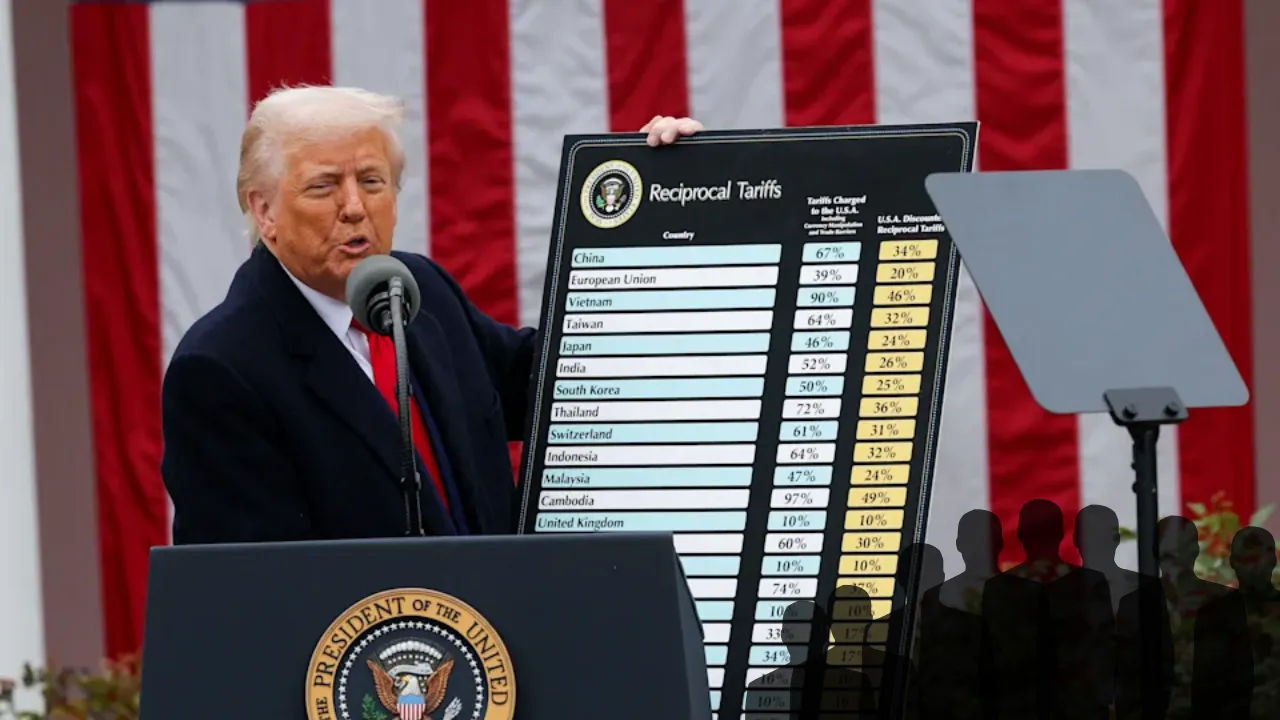
Speaking at the White House Rose Garden, Trump revealed a tiered tariff system targeting all U.S. trading partners, with rates ranging from 10% to 54%. The policy, which he labeled “reciprocal tariffs,” claims to match existing duties foreign nations impose on American goods. However, the abruptness and scale of the measures blindsided markets already reeling from months of trade uncertainty.
“This isn’t just a trade policy—it’s an economic detonation,” said Yeap Jun Rong, market strategist at IG. Analysts had anticipated flat tariffs of 15–20%, but the final rates exceeded even the most bearish forecasts. For instance:
- China: 54% total tariffs (34% new + 20% existing)
- Japan: 24%
- South Korea: 25%
- European Union: 39%
Critics immediately questioned the methodology behind these figures, as no official data corroborates the EU’s alleged 39% tariff on U.S. goods. The ambiguity fueled fears of retaliatory measures, potentially spiraling into a full-blown global trade war.
U.S. Markets: Futures Crash, Tech and Retail Stocks Hammered
U.S. stock futures nosedived within minutes of the announcement, signaling one of Wall Street’s worst pre-market routs in decades:
- S&P 500 futures: -4%
- Nasdaq 100 futures: -4.7%
- Dow Jones futures: -1,000+ points
The sell-off extended to after-hours trading, battering companies reliant on global supply chains:
- Apple, Nike, Walmart: -7%
- Amazon, Nvidia: -6%
“I’ve never seen anything like this,” CNBC’s Jon Fortt remarked. “This is worse than the market’s worst-case scenario.” The Dow had already closed its worst quarter since 2022 earlier this week, with tariff volatility erasing $3 trillion in market cap from S&P 500 firms.
Asia’s Bloodbath: Export Powerhouses Hit Hardest
Asian markets opened deep in the red as the region’s export-driven economies faced existential threats:
-
Hong Kong’s Hang Seng: -2.4%
-
Japan’s Nikkei 225: -3%
-
Vietnam’s Ho Chi Minh Index: -6% (worst performer)
China’s CSI 300 slid 1.1%, reflecting fears that its tech and manufacturing sectors—already strained by existing tariffs—could face production halts. Meanwhile, South Korea’s Kospi (-0.7%) and Thailand’s SET Index (-0.3%) mirrored the regional anxiety.
“These tariffs could push half the world into recession,” warned Olu Sonola, Fitch Ratings’ head of U.S. economic research.
Safe Havens Soar: Gold Hits Record Highs
With equities in freefall, investors flocked to gold, propelling the precious metal to unprecedented levels:
- Spot gold: $3,160/ounce (intraday record)
- Year-to-date surge: 18%
Gold’s rally underscores mounting macroeconomic anxiety. Notably, bullion escaped Trump’s tariff list, reinforcing its status as a crisis hedge. Other traditional safe havens, like the Japanese yen and U.S. Treasuries, also saw heightened demand.
Sector Spotlight: Consumer and Tech Giants Under Siege
1. Consumer Discretionary: Retailers like Walmart and Amazon face double jeopardy—higher import costs and reduced consumer spending power. Tariffs on Chinese goods could hike prices on electronics, apparel, and furniture by 10–15%, squeezing margins.
2. Technology: Semiconductor stocks (e.g., Nvidia) tumbled over fears of disrupted Asian supply chains. Apple, which manufactures 95% of iPhones in China, risks severe production delays if Beijing retaliates.
3. Automotive: Despite exemptions for USMCA-compliant goods, auto imports remain subject to prior steel/aluminum tariffs. Ford and GM shares slid 5% in after-hours trading.
Unanswered Questions: How “Reciprocal” Are These Tariffs?
- The EU’s average tariff on U.S. goods is actually 3.5%, per World Bank data—nowhere near the claimed 39%.
- Japan’s 24% rate contradicts its 2.5% average duty on American imports.
Historical Context: Echoes of 2018–2019 Trade Wars
- Cost U.S. companies $46 billion in added expenses.
- Reduced GDP growth by 0.5% annually.
What’s Next? Pathways for Investors and Policymakers
1. Investor Strategies:
Rotate into defensive sectors (utilities, healthcare).
Hedge with gold and Treasury ETFs.
Monitor forex markets for USD volatility.
2. Geopolitical Watchpoints:
China’s response: Retaliatory tariffs or export curbs on rare earth metals?
EU emergency meetings: Potential unified countermeasures.
Conclusion: A Precarious New Era for Global Trade
Trump’s “Liberation Day” tariffs have thrust the world into uncharted economic territory. With equities reeling, gold soaring, and policymakers scrambling, the stakes for multinational corporations and Main Street investors have never been higher. As the trade war escalates, one truth becomes clear: in global economics, there are no winners—only survivors.